What beer foam actually is: CO2 bubbles wrapped in protein film
Beer foam is not simply dissolved gas escaping to the surface. It is a colloidal structure — a dispersion of gas bubbles in liquid — where each bubble is stabilised by a thin film of surface-active molecules adsorbed at the air-water interface. Without that film, bubbles coalesce and collapse within seconds. What makes beer foam distinctive, and what separates a head that lasts three minutes from one that vanishes in thirty seconds, is the precise molecular composition of those bubble walls.
CO2 is the gas. At typical carbonation levels of 2.2–2.8 volumes in a lager, dissolved CO2 nucleates on microscopic surface irregularities — scratched glass, laser-etched carbonation points on the bottom of a properly prepared pint — and rises as discrete bubbles. That part is straightforward. The bubble-wall chemistry is where the real work happens.
Three classes of compound do the structural work. Lipid transfer protein 1 (LTP1), derived from barley endosperm, is the primary foam-positive protein in most lagers. It is a small (9 kDa), heat-stable, amphiphilic protein that adsorbs rapidly at the air-water interface and forms a viscoelastic film around each bubble. Its heat stability means it survives the boil largely intact — an important property. Protein Z (barley serpin, also called Z4), an albumin-fraction protein from barley, is the second major foam contributor; less aggressively surface-active than LTP1, but it contributes meaningfully to foam volume and persistence. Finally, iso-alpha acids — the bittering compounds produced when hop alpha acids isomerise during the boil — are not proteins at all, but they are strongly surface-active. They interact hydrophobically with LTP1 at the bubble surface, reinforcing the protein film and significantly extending head retention. A beer without hops has structurally weaker foam. This is why heavily hopped beers often show exceptional head even when other variables are unfavourable.
What destroys foam: lipids, detergent residue, and high-adjunct grain bills
Lipids are the primary enemy of beer foam. The mechanism is direct: free lipid molecules are surface-active and compete with foam proteins at the air-water interface. When a lipid displaces a protein from the bubble wall, the resulting film is thinner and far weaker — it ruptures under the internal pressure of the bubble much faster than a protein-rich film would. The source of the lipid does not matter to the physics. The collapse is the same whether the contamination comes from a dirty glass, from the brewery's raw materials, or from the consumer's hands or face.
In the brewery, lipids enter the wort primarily from grain husks during mashing and lautering. This is where grain bill composition becomes critical. Adjunct cereals — unmalted corn, rice, refined sugar — contribute little protein and relatively more free lipid compared to well-modified barley malt. High-adjunct grain bills (30–40% adjunct or more, common in economy lagers) therefore produce worts with lower foam-positive protein content and higher free lipid levels. The result is structurally weaker foam. This is one measurable reason craft beers brewed with 100% malt routinely outperform their high-adjunct counterparts on head retention, even at identical carbonation levels.
At the point of service, contaminated glassware is the single biggest controllable variable. Lip gloss, food oils from fingers, residual beer from a previous pour, and — critically — detergent residue all destroy foam on contact. Detergent residue is particularly insidious because the glass looks clean. Commercial glasswashers that use excessive detergent or insufficient rinse cycles leave an invisible film that collapses foam immediately. Even a single stray drop of cooking oil entering a poured beer can visibly ruin the head within moments. These are not edge cases. They are the everyday reality of on-trade beer service, and they explain why a well-brewed beer can look ordinary in the wrong glass.
How head retention is measured: the NIBEM value explained
The brewing industry does not rely on visual judgement alone to assess foam quality. The standard commercial measurement is the NIBEM value, expressed in seconds. NIBEM — an acronym for Niro-based instrument for beer foam evaluation — uses a standardised pour procedure and measures the time required for the foam column to collapse by exactly 30 mm after the pour settles. The principle is simple: a more stable foam film collapses more slowly, so a higher NIBEM number is always better.
Reference ranges give the numbers context. A well-made commercial lager typically scores 150–250 seconds. A wheat beer, with its high-protein wheat malt and proline-rich protein fraction, routinely reaches 250–400 seconds and sometimes higher. A poorly brewed high-adjunct lager with lipid contamination can fall below 100 seconds and show visible foam collapse before a drinker has finished reading the label. Most large breweries set internal NIBEM minima as part of finished-beer release specifications, alongside bitterness units, colour, and turbidity. Foam stability is a release criterion, not an afterthought.
NIBEM is sensitive to exactly the same variables that affect visual foam: free lipid content, total foam-positive protein (primarily LTP1 and protein Z), iso-alpha acid concentration, dissolved CO2 volume, pour temperature, and glassware condition. In a QC lab environment, NIBEM is run under rigorously controlled conditions with standardised glassware cleaned and dried to a specific protocol — because any variation shifts the result. That standardisation is itself an acknowledgement of how many variables can degrade foam between the tank and the consumer's glass.
Glass washing: why the last ten seconds before the pour matter as much as the brewery
A well-brewed beer with a NIBEM of 220 seconds can be functionally ruined at the bar by a glass washed with too much detergent and not fully rinsed. This is not an edge case — it is a routine failure mode in on-trade service, and it is why serious beer venues specify glassware protocols with the same precision they apply to serving temperature and line hygiene.
The correct procedure is straightforward. Use a low-residue commercial glasswasher detergent calibrated to the minimum effective concentration — more is not better, and excess detergent is the most common error. Follow every wash cycle with a full cold rinse that removes all detergent film. Allow glasses to air-dry inverted on a clean drip rack rather than cloth-drying, which transfers textile fibres and potentially oils. Never store beer glasses adjacent to glassware that has had contact with wine, spirits, or fatty foods without ensuring all items are fully clean. The visible test for a properly prepared glass: rinse it with water and hold it up to the light. If the water sheets evenly across the entire interior surface, the glass is clean. If it beads or draws away in patches, there is lipid contamination.
Some venues use dedicated beer glasses that never see detergent — only cold rinse water between pours. This is the traditional approach in certain Belgian and German establishments and produces the cleanest foam environment possible. The tradeoff is that cold rinsing alone cannot remove biological contamination, so glass hygiene requires more discipline around the rest of the handling procedure. For most commercial operations, the correct detergent concentration plus a thorough rinse is the practical answer. The point is that glassware preparation is a technical specification, not a hospitality detail. The brewer cannot control what happens to the beer after it leaves the brewery — but the on-trade buyer can, and it directly determines the foam quality every customer experiences.
Water chemistry and foam: how Qiandao Lake source water supports head retention
Water chemistry affects foam through several indirect pathways, all of which trace back to mash conditions. Calcium ions at the right concentration — typically 50–100 ppm — support mash pH stability in the ideal 5.2–5.6 range and promote protein flocculation during fermentation, which in turn affects how much foam-positive protein survives into the finished beer. High bicarbonate raises mash pH above that range, impairs amylase and protease enzyme activity, and reduces the efficiency of protein modification during malting and mashing — all of which reduces LTP1 and protein Z availability in the final wort. Hard, high-carbonate water is therefore a subtle but measurable liability for foam quality in pale lagers.
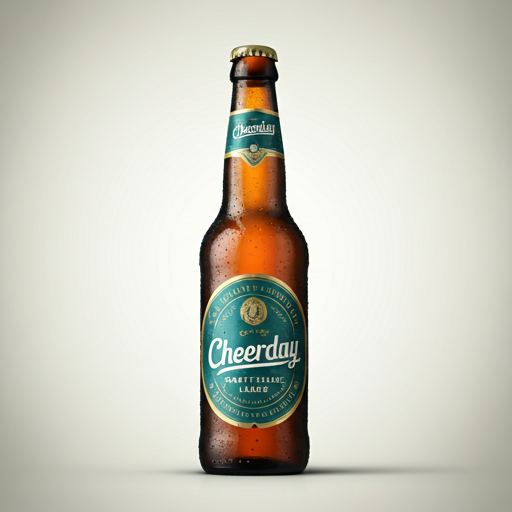
Cheerday has brewed on Qiandao Lake source water in Chun'an, Hangzhou since 1985. Qiandao Lake — one of the largest freshwater reservoirs in China, formed by mountain runoff through forested catchment with minimal agricultural or industrial input — is naturally soft and low in dissolved minerals, with low background bicarbonate. For foam purposes, this starting point offers two concrete advantages. First, mash pH can be reached accurately with small, controlled additions of brewing salts, maximising enzyme activity and protein modification. Second, the low overall mineral load means fewer competing ions interfering with the protein chemistry that foam stability depends on. The longer story of the lake and the brewery is on our heritage page.
The practical outcome is that Cheerday's pale lagers enter fermentation with a protein fraction that is well-modified and well-preserved — sufficient LTP1 and protein Z to build a structurally sound foam, combined with iso-alpha acids from hop additions to reinforce it. Grain bill discipline matters too: our malt-forward formulations avoid the lipid-loading and protein dilution that come with heavy adjunct use. The foam you see on a poured Cheerday beer is the end product of source water chemistry, grain selection, hop dosing, and a process designed to carry foam-positive compounds intact from the mash tun to the glass. For on-trade buyers and distributors, that consistency has a real commercial value: a beer that holds its head from the first pour to the last is easier to sell, easier to represent, and harder for a competitor to undercut on visible quality.
Frequently asked questions about beer foam
Why does glass cleanliness affect beer foam?
Any lipid contamination on a glass surface — from dishwasher detergent residue, previous drinks, food oils transferred from hands, or lip gloss — immediately disrupts beer foam. Lipids are surface-active molecules that compete with the protein film at the air-water interface of foam bubbles, weakening the bubble walls and causing rapid collapse. A properly washed and rinsed glass with no residual detergent produces markedly better foam than a glass washed with excessive detergent or not fully rinsed. In beer quality assessment, glassware preparation is standardised precisely because of this effect.
Why does wheat beer have such good foam?
Wheat (both malted and unmalted) contains high levels of proline-rich proteins that act as excellent foam stabilisers. Specifically, the high-molecular-weight protein fraction from wheat interacts strongly with iso-alpha acids at the bubble surface, creating a foam film that is both persistent and visually fine-bubbled. German Hefeweizen foam — famously dense and long-lasting — is a direct product of the wheat malt content (typically 50–70% of the grain bill). Barley-only beers can still produce good foam with properly modified malt and minimal lipid contamination, but wheat significantly amplifies this property.
What is the NIBEM test for foam?
NIBEM (Niro-based instrument for beer foam evaluation) is the standard commercial measurement of foam stability. A sample is poured under standardised conditions, and the instrument measures how many seconds it takes for the foam column to collapse by 30mm. Higher NIBEM values indicate better foam stability — typically 150–250 seconds for a well-made commercial lager, 250–400 seconds for a wheat beer. The measurement is affected by the same variables that affect visual foam: lipid content, protein level, iso-alpha acid content, gas content, and pour conditions.
The takeaway
Beer foam is a measurable, controllable quality parameter — not luck. It starts with water chemistry and grain bill protein, is built by hop iso-alpha acids during the boil, and is either preserved or destroyed at the point of service by how the glass was last washed. At Cheerday, our soft Qiandao Lake source water and malt-forward grain bills give us the protein foundation that foam requires. If you are a distributor or on-trade buyer interested in a product that holds its head from the first pour to the last, contact our export team about the range.
Talk to our export team